Harmful interspecies interactions may aid microbiota
Uploaded 04/18/2022


Studies of antagonistic interactions mainly focus on pathogen transmission but harmful interspecies interactions may also aid microbiota of the resource organisms by also including beneficial microbes
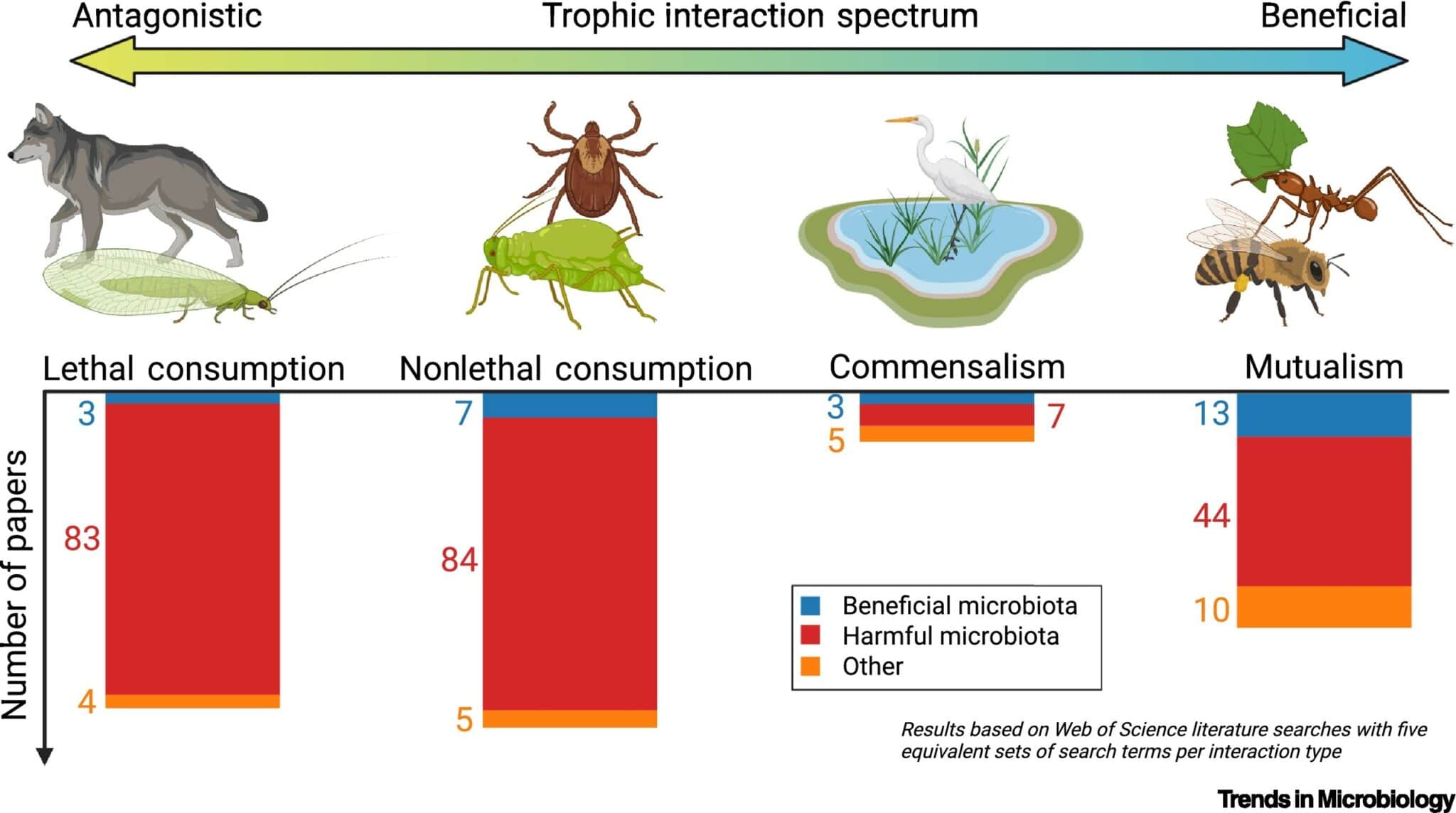
Studies of antagonistic interactions mainly focus on pathogen transmission but harmful interspecies interactions may also aid microbiota of the resource organisms by also including beneficial microbes.
The authors of this great opinion piece I summarize here argue that the focus on the transmission of harmful microbes is likely due to the direct negative impact that these pathogens have on the health of humans, domesticated animals, and agricultural crops.
It was found that only 3-7% of published papers on antagonistic species interactions reported also the transmission of beneficial microorganisms.
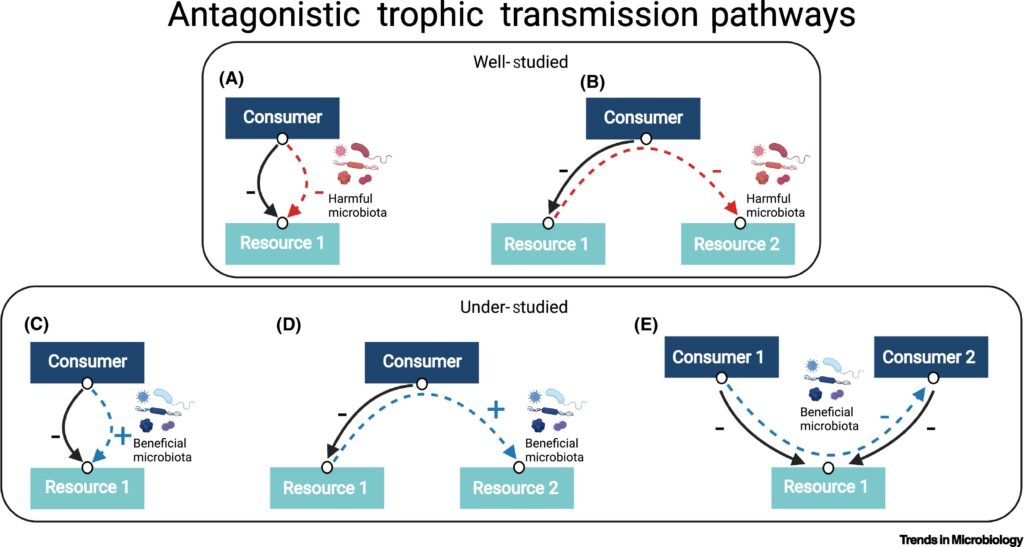
The authors emphasizes that the dispersal of beneficial microbiota via antagonistic interactions is widespread in natural systems and should be studied more.
The authors cleverly enumerate the many instances in which an antagonistic interaction may include the transmission of beneficial microbes; below is a summary of their main points.
Predation, herbivory, and parasitism may help microbiota assembly via horizontal transmission by transferring beneficial microorganisms to prospective hosts or distributing them in local environmental reservoirs.
Even vertically transmitting hosts, consumers may introduce a beneficial microorganismal strain to a naïve host population.
Consumer transmission of microbiota might be particularly important for sessile resource species, such as plants, corals, sponges, and algae.
For example, herbivores transport mycorrhizal fungi by carrying plant material or soil or by excreting viable fungi or fungal spores.
Mycorrhizal dispersal has been demonstrated to facilitate plant invasions; moreover, some plants can successfully establish only if colonizing with their fungi.
Beneficial microbial symbionts can also be transmitted during antagonistic interactions involving motile resource species.
For example, aphids are plant parasites that harbor obligate and facultative bacterial symbionts that help them resist mortality from parasitoid wasp or improve the resistance of aphids to pathogenic fungi.
The authors hypothesize that host acclimatization to environmental stress such as climate change maybe also supported by trophic transmission of beneficial microbiota.
When corals are stressed by high temperature they lose their Symbiodiniaceae symbiont algae.
Feces of the fish eating the coral might be sources of algae symbionts cells during bleaching events.
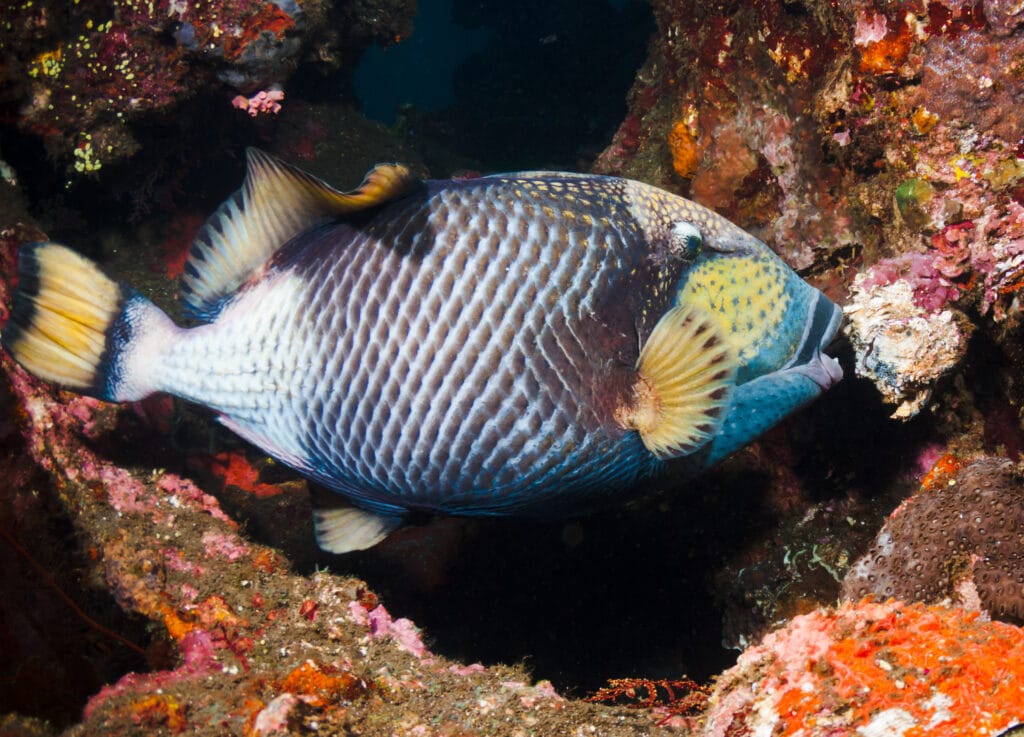
Finally, microorganisms transferred during antagonistic interactions may also indirectly benefit consumed species by repelling other potential consumers.
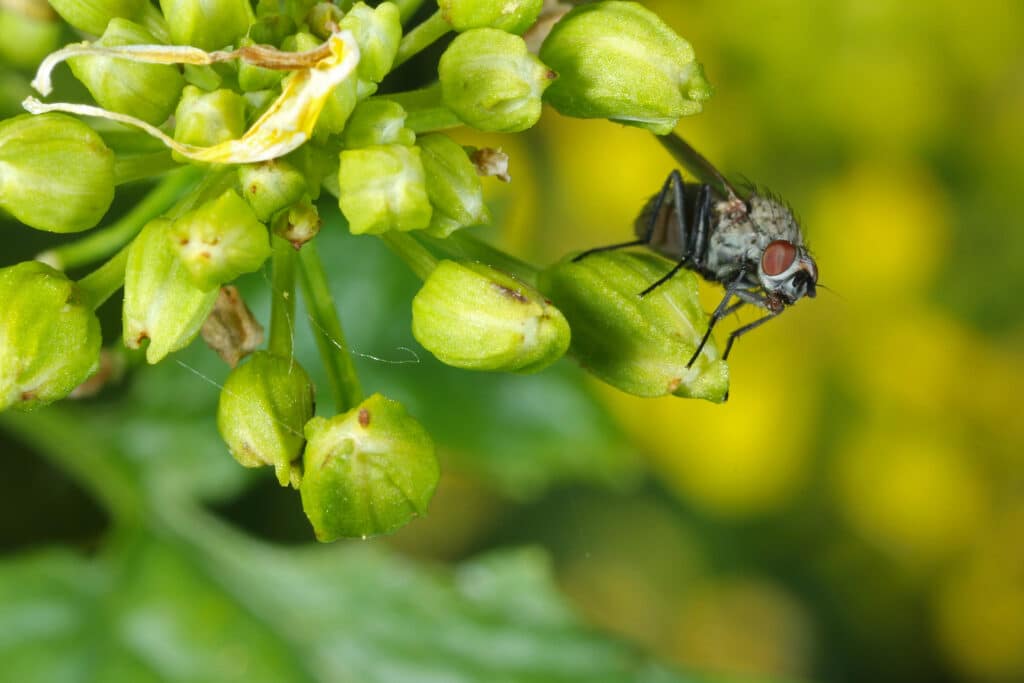
Laboratory experiments demonstrated that the cabbage root fly Delia radicum when feeding sometimes transferred a strain of the bacterium
Pseudomonas protegens that promoted plant growth and killed most of the other insects eating the plant, but not D. radicum.
Thank you for biting: dispersal of beneficial microbiota through ‘antagonistic’ interactions by C.G.B.Grupstra, N.P.Lemoine, C.Cook, A.M.S.Correa