Mosquito Nectar Preferences Guide Control Strategies
Uploaded 04/21/2025


Research reveals mosquito species have distinct nectar preferences that can optimize sugar-bait placement for effective vector control. Findings show regional variations in plant feeding choices.
A landmark systematic review published in Environmental Entomology has revealed critical patterns in mosquito feeding ecology that could fundamentally transform global vector control strategies. Conducted by researchers from the University of Oxford in collaboration with the Innovative Vector Control Consortium and University of Cambridge, the study synthesized data from 49 peer-reviewed studies encompassing 74 mosquito species and their interactions with 145 plant species. The findings provide unprecedented insights into the complex nutritional ecology of these medically important insects.
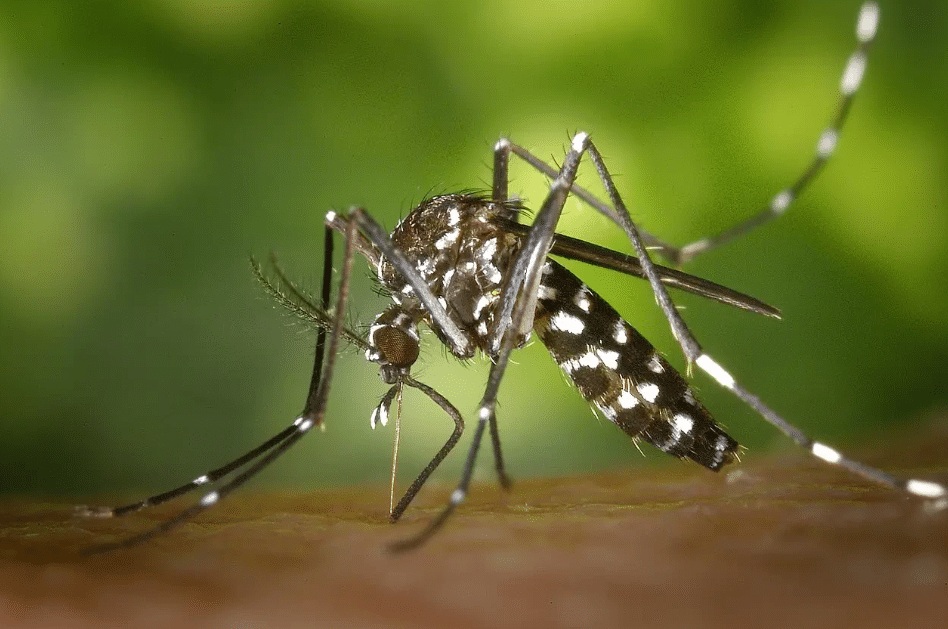
Aedes species mosquito
Species-Specific Feeding Patterns with Major Implications
The research team identified clear, consistent preferences among epidemiologically important mosquito groups:
- Aedes species (including dengue and Zika vectors) showed strongest attraction to Asteraceae (daisy) and Rosaceae (rose) families, with African populations displaying additional preference for Fabaceae (legumes)
- Anopheles mosquitoes (malaria vectors) demonstrated striking geographic variation – African species preferentially fed on legumes while populations elsewhere primarily targeted daisy-family plants
- Culex species (West Nile virus vectors) exhibited the most specialized behaviour, with over 80% of recorded feedings on Asteraceae species
These preferences held particularly important implications for major disease vectors. The yellow fever mosquito (Aedes aegypti) showed frequent feeding on legume flowers and impatiens (Balsaminaceae), while the primary malaria vector Anopheles gambiae displayed concerning attraction to invasive species including castor bean (Ricinus communis) and lantana (Lantana camara). This suggests climate-driven plant invasions could inadvertently expand vector habitats.
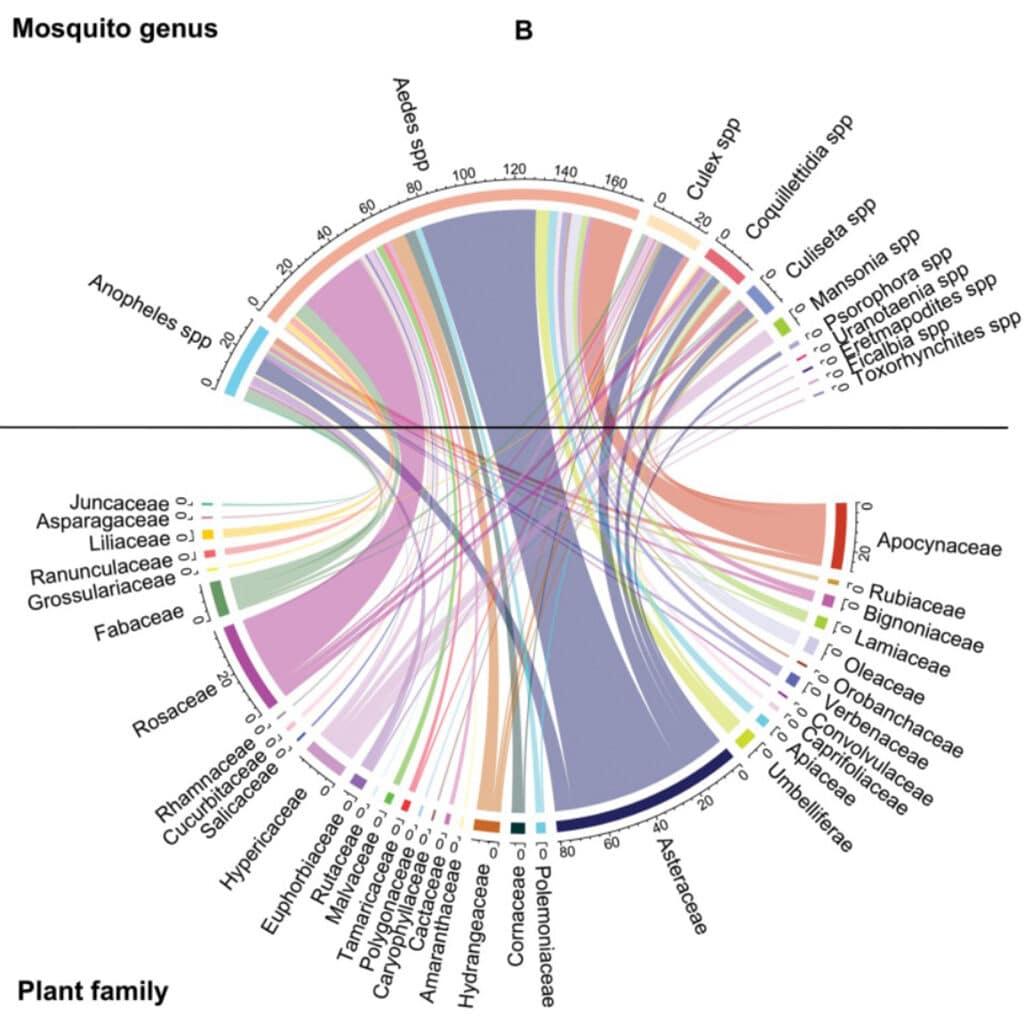
Chord diagram visualizing mosquito-plant interaction networks
Implications for Vector Control
The findings carry significant weight for developing Attractive Targeted Sugar Baits (ATSBs), an emerging mosquito control strategy. Researchers noted that:
- Landscapes rich in preferred nectar sources may reduce ATSB effectiveness
- Areas with limited natural sugar availability present ideal ATSB deployment sites
- Invasive plant expansion could inadvertently support disease vector populations
“Understanding these plant-mosquito relationships helps us predict where sugar baits will work best,” explained lead researcher Eva Herreros-Moya. “In vegetation-dense areas, we might need to adjust bait formulations to compete with natural sources.”
Transforming Vector Control Through Ecological Understanding
The findings carry profound implications for developing and deploying Attractive Targeted Sugar Baits (ATSBs), an increasingly important tool in integrated vector management. Key insights include:
- Landscape Ecology Effects
- Areas with abundant preferred nectar sources may require modified ATSB formulations
- Arid regions with limited natural sugar availability show greatest ATSB effectiveness
- Climate Change Adaptation
- Tracking invasive plant spread helps predict new vector habitats
- Changing floral communities may alter mosquito nutritional ecology
- Species-Specific Strategies
- Regional variations necessitate customized bait compositions
- Control programs must account for local mosquito-plant interactions
“These findings allow us to work with mosquito ecology rather than against it,” explained lead researcher Eva Herreros-Moya. “By understanding their natural feeding preferences, we can develop smarter interventions that outcompete environmental nectar sources where it matters most.”
Critical Knowledge Gaps and Future Directions
While establishing foundational patterns, the review revealed crucial research needs:
- Missing Vector Data: No nectar preference records exist for expanding malaria vectors like Anopheles stephensi
- Field Validation: Few studies confirm lab-observed preferences in natural conditions
- Nutritional Ecology: How nectar quality (not just species) affects mosquito fitness remains unclear
The research team is now addressing these gaps through:
- Field studies mapping nectar availability across African landscapes
- Molecular analysis of mosquito gut contents to identify natural feeding patterns
- Controlled experiments testing bait effectiveness against preferred nectar sources
Final Thoughts
The discovery that major disease vectors like Aedes aegypti and Anopheles gambiae have distinct floral preferences gives public health experts an unexpected advantage in the fight against mosquito-borne illnesses. As climate change alters plant distributions and mosquito ranges, these insights will become increasingly vital for protecting vulnerable communities.
Ultimately, this study demonstrates how detailed ecological knowledge can transform pest management—turning mosquitoes’ natural behaviors against them to create more effective, sustainable control strategies. The future of vector control may well bloom from understanding what flowers these dangerous insects find irresistible.