How soil multitrophic interactions boost ecosystem health and resilience
Uploaded 05/19/2025


Soil multitrophic interactions drive essential ecosystem functions like nutrient cycling and climate regulation. Diverse soil organisms work together to maintain healthy ecosystems and resist environmental changes through complex food web connections.
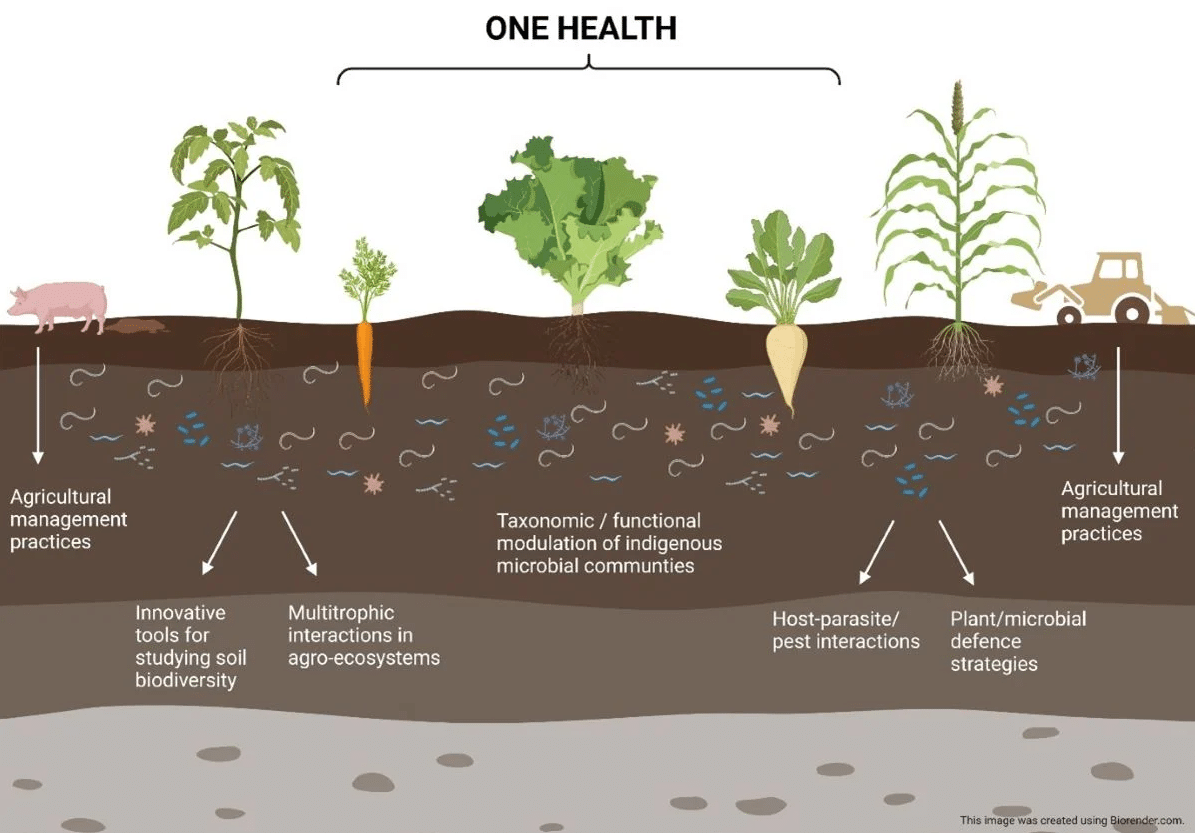
Soil is much more than just dirt—it’s a living, breathing ecosystem teeming with microscopic and macroscopic organisms that form intricate food webs. These multitrophic interactions between bacteria, fungi, protists, nematodes, earthworms, and larger fauna are fundamental to:
-
Nutrient cycling (breaking down organic matter into usable plant nutrients)
-
Carbon sequestration (storing carbon to mitigate climate change)
-
Soil structure formation (creating spaces for air, water, and root growth)
-
Pest and disease control (natural regulation of harmful organisms)
Without these interactions, ecosystems would collapse, leading to reduced agricultural productivity, increased greenhouse gas emissions, and loss of biodiversity.
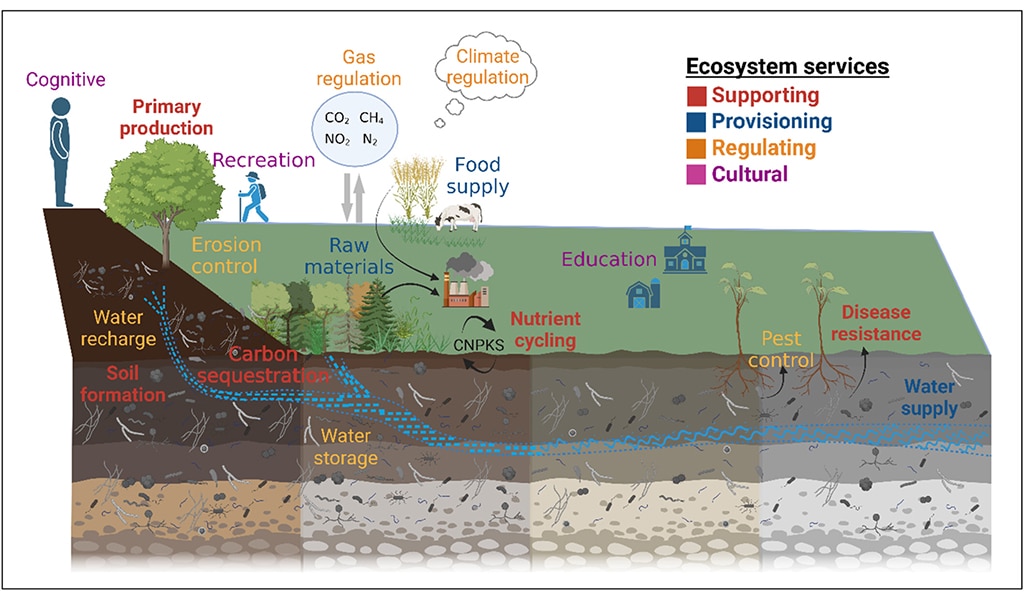
Diagram showing how soil biodiversity supports nutrient cycling, carbon storage, and climate regulation
How Soil Food Webs Work: Bottom-Up and Top-Down Effects
1. Bottom-Up: Plants Fuel the System
Plants are the foundation of soil food webs through:
-
Root exudates (sugars and acids that feed microbes)
-
Leaf litter (organic matter that decomposers break down)
-
Symbiotic relationships (like mycorrhizal fungi that help plants absorb nutrients)
Higher plant diversity = More stable and resilient soil ecosystems
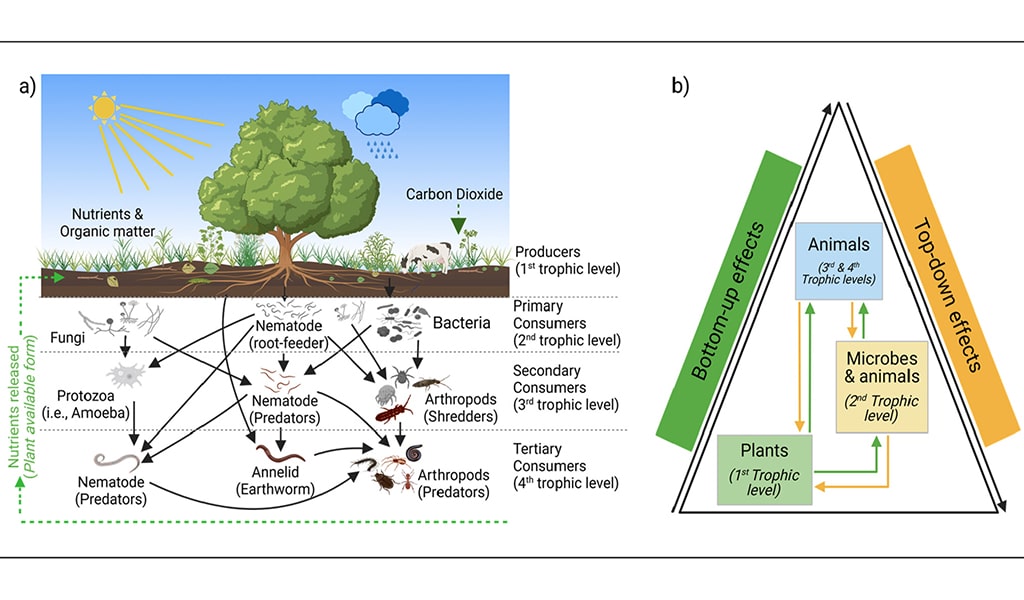
Soil food web diagram showing energy flow between plants, decomposers, and predators
2. Top-Down: Predators Keep Balance
Predators (mites, centipedes, nematodes) regulate populations of microbes and herbivores, preventing any single group from dominating. Examples:
-
Predatory mites control root-eating nematodes, protecting crops.
-
Earthworms enhance soil aeration and nutrient availability.
-
Fungal-feeding protozoa release nitrogen for plant uptake.
Disruptions (like pesticides or tillage) can break these connections, reducing soil health.
Threats to Soil Multitrophic Interactions
Human activities are degrading soil biodiversity at an alarming rate:
- Intensive agriculture (monocropping, chemical fertilizers, and pesticides)
- Deforestation & land-use change (destroys habitats and disrupts food webs)
- Climate change (alters moisture and temperature, affecting microbial activity)
- Pollution (heavy metals and microplastics harm soil organisms)
Without intervention, we risk losing vital ecosystem services that soils provide.
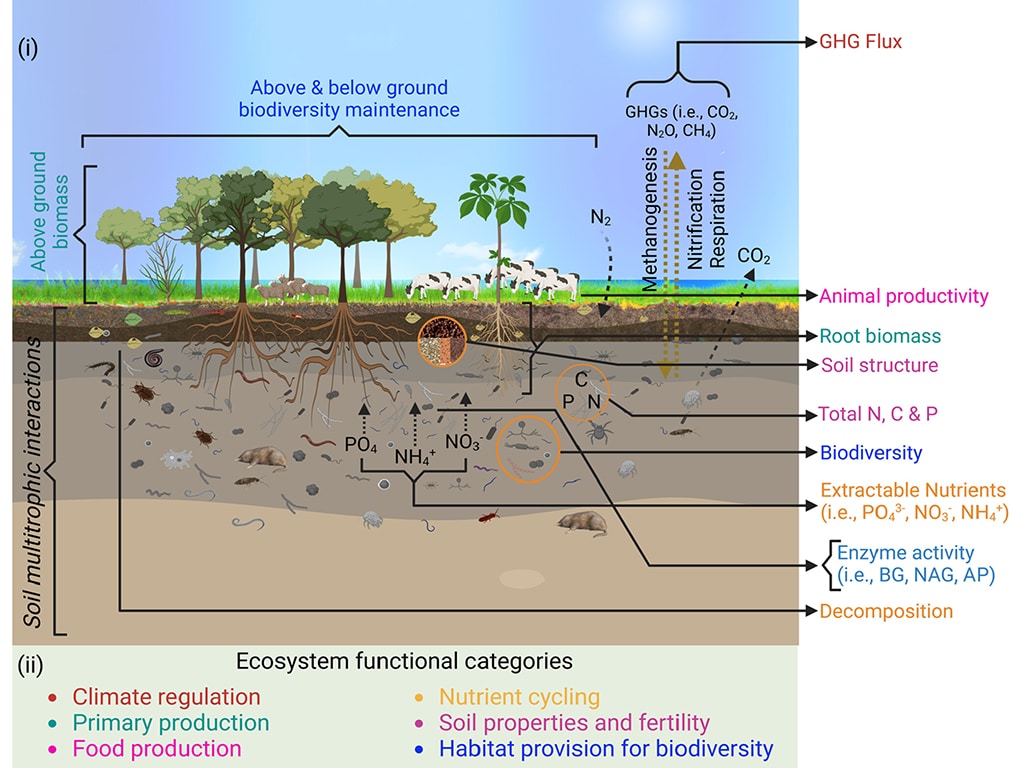
Infographic of soil health indicators including enzyme activity and nutrient cycling metrics
Future Research and Conservation Strategies
Scientists are working on new ways to study and protect soil biodiversity:
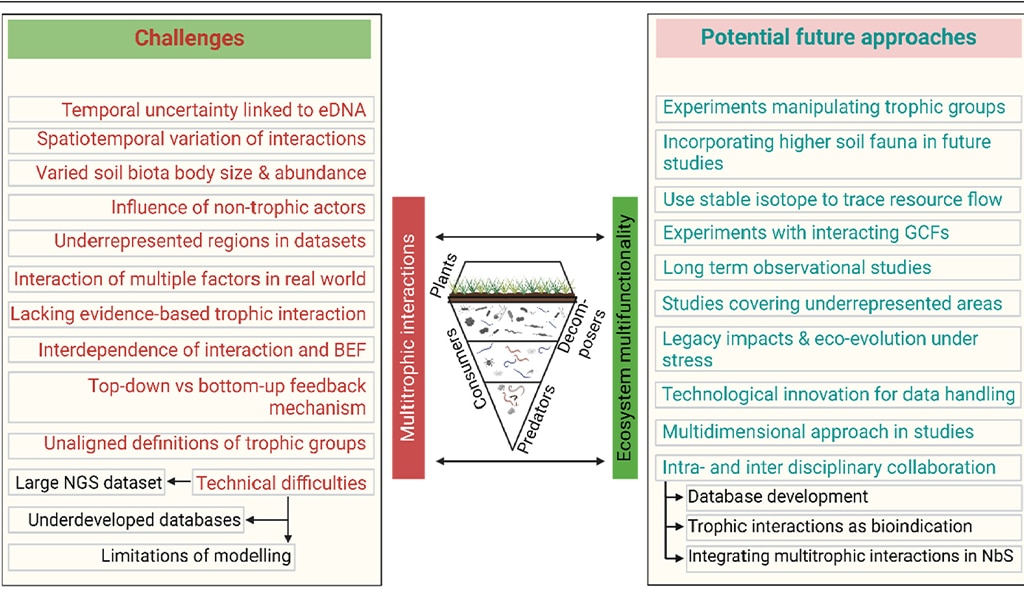
- Advanced DNA sequencing (e.g., eDNA) to map soil food webs
- Nature-based solutions (cover crops, agroforestry, reduced tillage)
- Better food web models to predict how climate change affects soils
- Global soil biodiversity monitoring (like the Soil Biodiversity Observatory Network)
Farmers and policymakers must prioritize soil-friendly practices to ensure long-term food security and climate resilience.
Research framework showing molecular tools and modelling approaches for soil biodiversity studies
Conclusion: The Critical Role of Soil Biodiversity in Our Planet’s Future
The intricate web of soil multitrophic interactions represents one of Earth’s most vital yet underappreciated life support systems. As we’ve explored, these complex relationships between organisms – from microscopic bacteria to visible earthworms – form the foundation for nearly all terrestrial ecosystems. Their proper functioning is not merely an ecological concern, but a matter of human survival and planetary health.
Why This Matters Now More Than Ever
In our current era of climate crisis and biodiversity loss, understanding and protecting soil ecosystems has become urgent:
-
-
Climate Change Mitigation
Healthy soils store more carbon than all terrestrial vegetation and the atmosphere combined. The interactions between plant roots, mycorrhizal fungi, and decomposers form nature’s most efficient carbon sequestration system. Disrupting these relationships accelerates climate change while protecting them offers a powerful natural solution. -
Food Security
With global population projected to reach 10 billion by 2050, we cannot afford continued soil degradation. Multitrophic interactions naturally maintain soil fertility, control pests, and support crop resilience – reducing our reliance on synthetic inputs that often harm these very systems. -
Water Security
Soil organisms create the pore structures that regulate water infiltration and storage. Their decline means more flooding, drought vulnerability, and pollution from agricultural runoff. -
Biodiversity Conservation
Soil contains about 25% of our planet’s biodiversity. Protecting these organisms means preserving the base of terrestrial food chains that support all life.
-