Complex interspecies interactions: collaboration and cognition
Uploaded 03/01/2025


The natural world is full of fascinating interspecies collaborations that go beyond simple predator-prey dynamics, these relationships showcase the cognitive and ecological complexity of species working together.
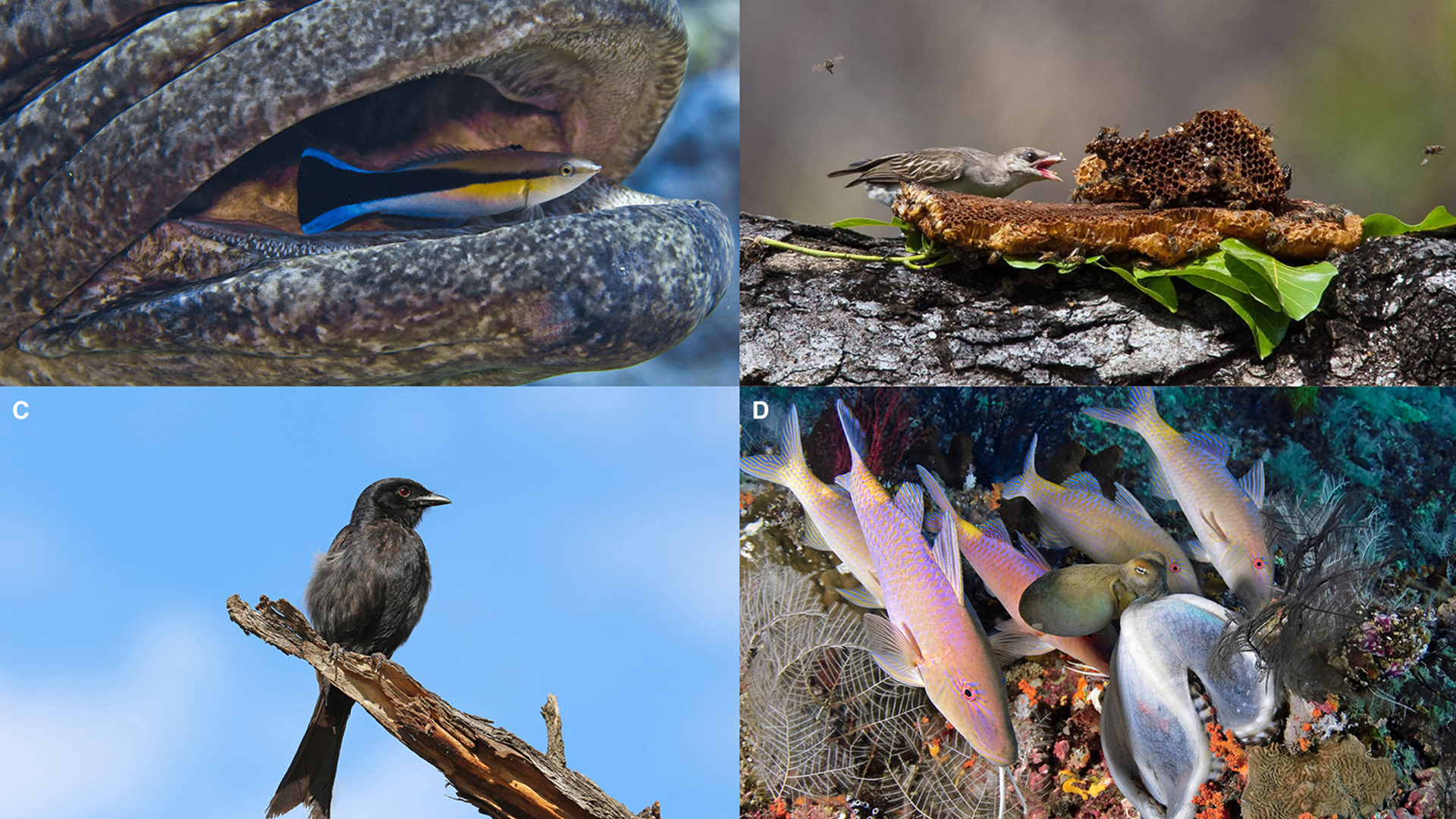
The natural world is full of fascinating relationships between species that go beyond the simple predator-prey dynamic. This paper by Eduardo Sampaio, Alexandra K. Schnell, and Piero Amodio dives into interspecies interactions that often involve complex collaborations where different species work together to gain mutual benefits. From cleaning stations to cooperative hunting, these relationships highlight the intricate ways in which species interact, adapt, and evolve together.
Here are some fascinating examples that the authors have put together:
Cleaning stations: a win-win partnership
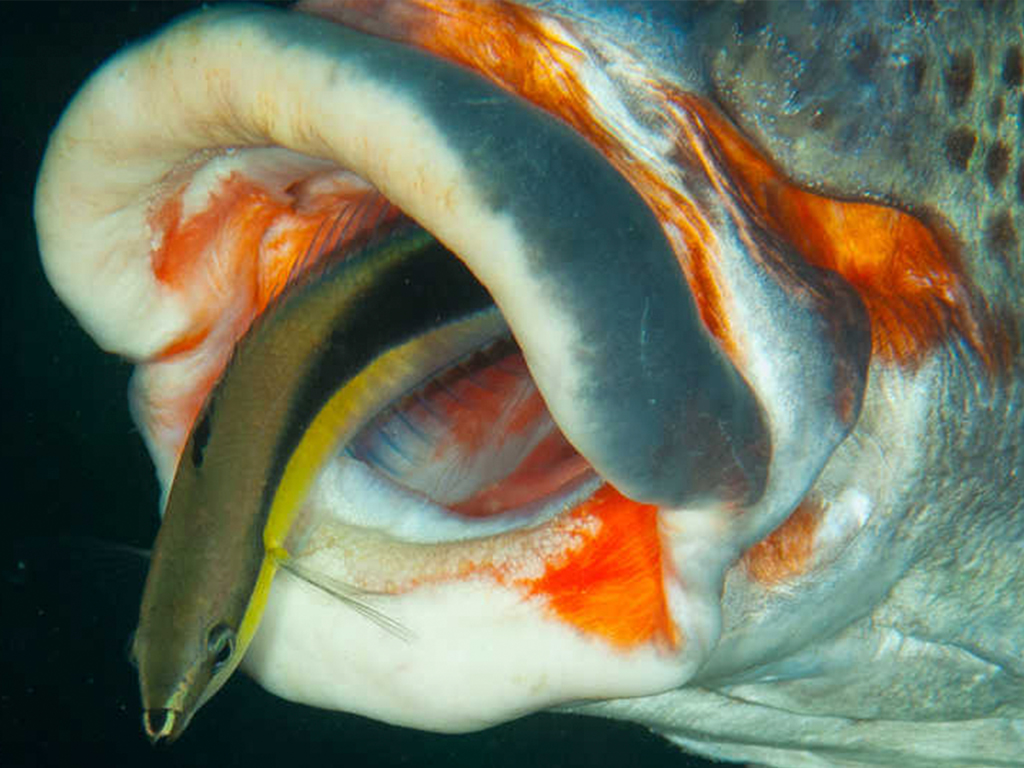
One of the most well-known examples of interspecies cooperation is found in cleaning stations, where cleaner wrasses (Labroides dimidiatus) remove parasites from larger fish. This interaction benefits both parties: the cleaner fish get a meal, and the host fish enjoy better health. What’s fascinating is the cognitive complexity involved. Cleaner wrasses adjust their behavior based on the client’s reactions, avoid damaging the host’s mucus layer, and even consider how bystanders perceive their actions. This level of social awareness ensures that the interaction remains beneficial for both species.
Honeyguides and humans: a bidirectional collaboration
Another striking example is the relationship between greater honeyguide birds (Indicator indicator) and humans in Africa. Honeyguides lead humans to bee nests using specific vocalizations and visual signals. In return, humans harvest honey, leaving behind beeswax and larvae for the birds. This partnership involves active communication and cultural transmission as both species learn to respond to each other’s signals. It’s a remarkable case of interspecies collaboration shaped by ecological benefits and mutual learning.
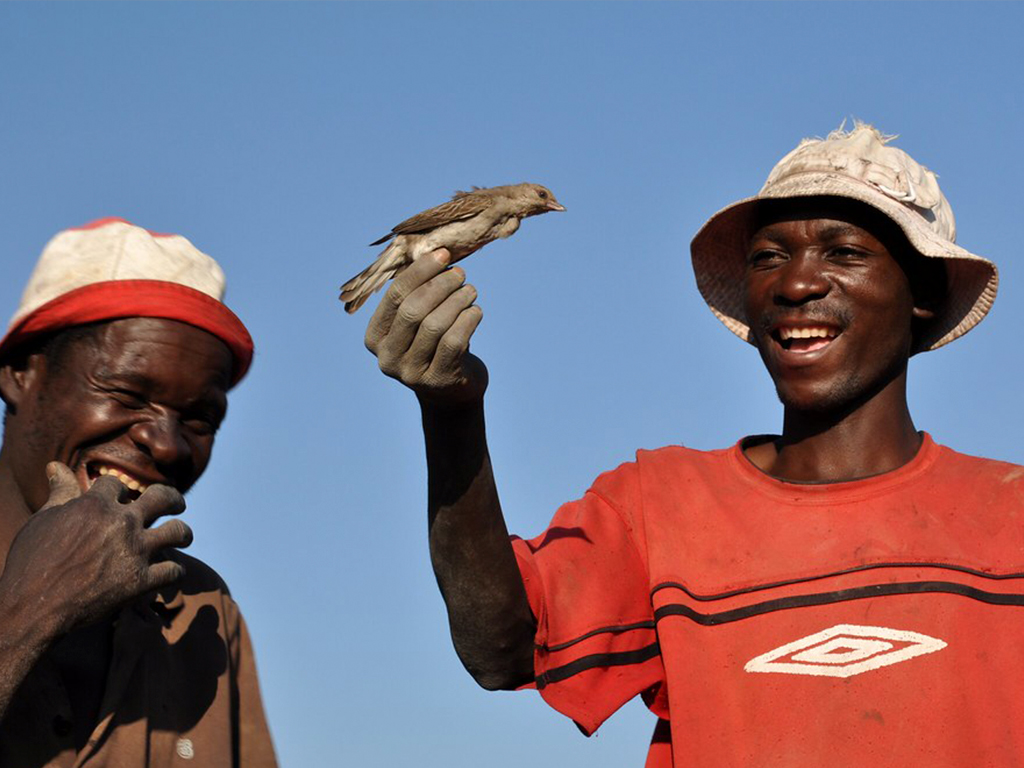
Credit: Claire Spottiswoode, Dorothy Hodgkin Fellow from the University of Cambridge
Drongos and meerkats: trust and deception
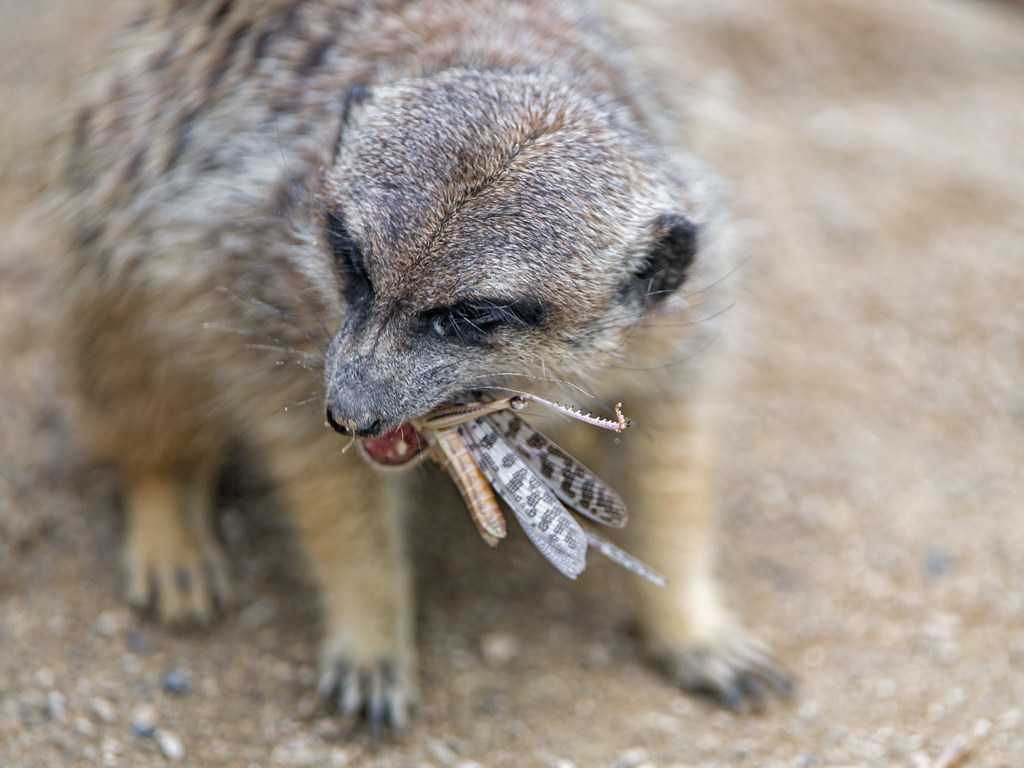
The fork-tailed drongo (Dicrurus adsimilis) and meerkats (Suricata suricatta) showcase a more nuanced relationship. Drongos act as sentinels, alerting meerkats to predators with alarm calls. However, drongos sometimes exploit this trust by issuing false alarms, causing meerkats to abandon their food, which the drongos then steal. This behavior demonstrates an interspecific audience effect, where both species adapt their actions for mutual, though sometimes asymmetrical, benefits. It’s a dynamic interaction that highlights the cognitive challenges of navigating interspecies relationships.
Collaborative hunting: octopus and fish
Perhaps the most intriguing examples that the authors mention come from cooperative hunting. The day octopus (Octopus cyanea) and fish like coral trout (Plectropomus spp.) and goatfish (Parupeneus spp.) work together to hunt prey. Fish locate and signal prey to the octopus, which uses its arms to flush out or ensnare the prey. This partnership involves a two-way flow of information and coordinated behavior, with the octopus adapting its tactics based on the fish’s actions. Despite their solitary nature, octopuses demonstrate remarkable cognitive flexibility in these interactions, interpreting signals and adjusting their strategies accordingly.
Ecological and cognitive mechanisms
These interspecies interactions raise important questions about the ecological and cognitive mechanisms that enable them. Dietary overlap and complementary hunting strategies are key factors. For example, octopuses and fish share a preference for similar prey, but their hunting methods differ, creating a synergy that benefits both. Habitat complexity, such as coral reefs, also plays a role by providing opportunities for collaboration. Additionally, shared circadian rhythms and communication channels, like visual signals, facilitate coordination between species.
Cognitively, these interactions require skills like species recognition, behavioral flexibility, and the ability to interpret signals. These abilities suggest a high level of cognitive plasticity, challenging traditional views of solitary animals.
The octopus-fish collaborative hunting example highlights several fascinating cognitive mechanisms that enable these two very different species to work together effectively. Here’s a breakdown of the key cognitive processes involved:
- Species Recognition
The paper mentions that octopuses adapt their behavior based on the type of fish partner, distinguishing between cooperative species (e.g., coral trout, goatfish) and exploitative ones (e.g., ambush predators like groupers). This implies a level of species recognition.
- Behavioral Flexibility
Octopuses adjust their hunting strategies depending on the fish’s actions, such as flushing out prey when signaled or using defensive behaviors (e.g., punching) against exploitative fish.
- Signal Interpretation
It is described how fish like coral trout use referential gestures (e.g., pointing) to indicate prey locations, and octopuses respond to these signals. This demonstrates the octopus’s ability to interpret heterospecific communication.
- Delayed Gratification
Fish often wait for the octopus to flush out prey before capturing it, which requires self-control. Similarly, octopuses must decide when to act, balancing risks and rewards.
- Social Assessment
The paper discusses how fish may distinguish between “good” and “bad” cooperators and octopuses direct negative feedback (e.g., punching) toward specific exploitative individuals. This suggests a level of social assessment.
- Cognitive Plasticity
Octopuses, despite being solitary, demonstrate remarkable adaptability in collaborating with fish, challenging traditional views of their social behavior.
- Learning and Experience
While not explicitly detailed, the paper implies that these interactions may involve learning, as octopuses and fish refine their collaboration over time.
The evolution of cognition through interspecies interactions
Interspecies interactions like these offer new insights into the evolution of cognition. Traditionally, social challenges within species were seen as the primary drivers of intelligence. However, interactions between species, such as collaborative hunting, suggest that heterospecific relationships can also shape cognitive abilities. For octopuses, the cognitive skills needed to collaborate with fish may have evolved in response to ecological pressures like predator evasion or environmental exploration, later being co-opted for interspecies cooperation.
Concluding thoughts
Interspecies interactions reveal the intricate ways species collaborate and adapt. These relationships demonstrate that social complexity can arise in diverse ecological contexts, not just within species. By studying these interactions, we gain a richer understanding of the evolution of cognition and social behavior, challenging traditional views and opening new avenues for research. The natural world continues to surprise us with its complexity, reminding us of the interconnectedness of all life.
Paper: Current Biology: Cognition in multi-species sociality
Authors: Eduardo Sampaio, Alexandra K. Schnell and Piero Amodio