How Nutrients Shape Ecological Networks
Uploaded 04/10/2025


Nutrients like proteins, lipids, and carbs fundamentally shape ecological networks by driving species interactions and determining ecosystem stability, according to new research that transforms our understanding of food web dynamics.

A ground-breaking study published in the Journal of Animal Ecology introduces the revolutionary concept of “nutritional networks,” revealing how fundamental nutrients like proteins, lipids, and carbohydrates determine the structure and stability of ecological communities. By examining predator-prey interactions across diverse ecosystems, researchers demonstrate that nutrient availability acts as a hidden architect of food webs, influencing species behaviour, network complexity, and ecosystem resilience.
The Hidden Language of Nutrients in Nature
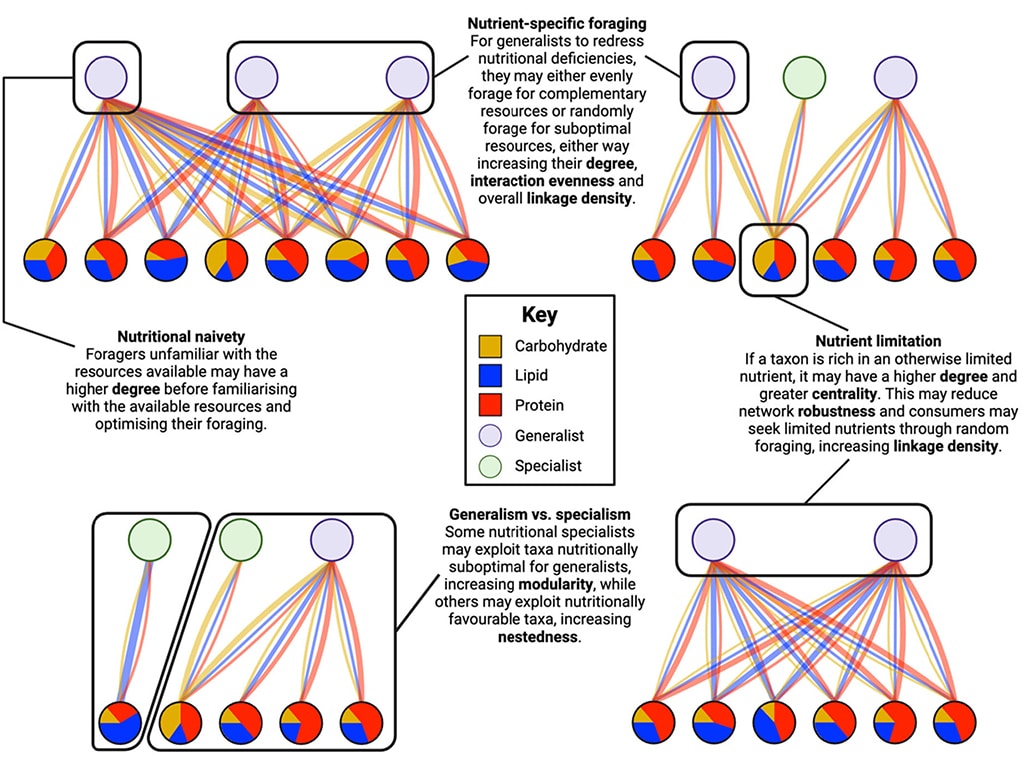
Nutrients serve as the invisible currency of ecological interactions, creating a complex economy of energy exchange that determines species survival and ecosystem health. The study demonstrates three critical patterns:
Nutrients serve as the currency of ecological interactions, yet their role in shaping complex networks has been largely overlooked. The study demonstrates that:
- Generalist species expand their diets to compensate for nutritional deficiencies
- Lipid limitation forces predators to target lipid-rich prey disproportionately
- Nutritional imbalances can trigger cascading ecosystem effects
A Deep Dive into Spider-Prey Dynamics
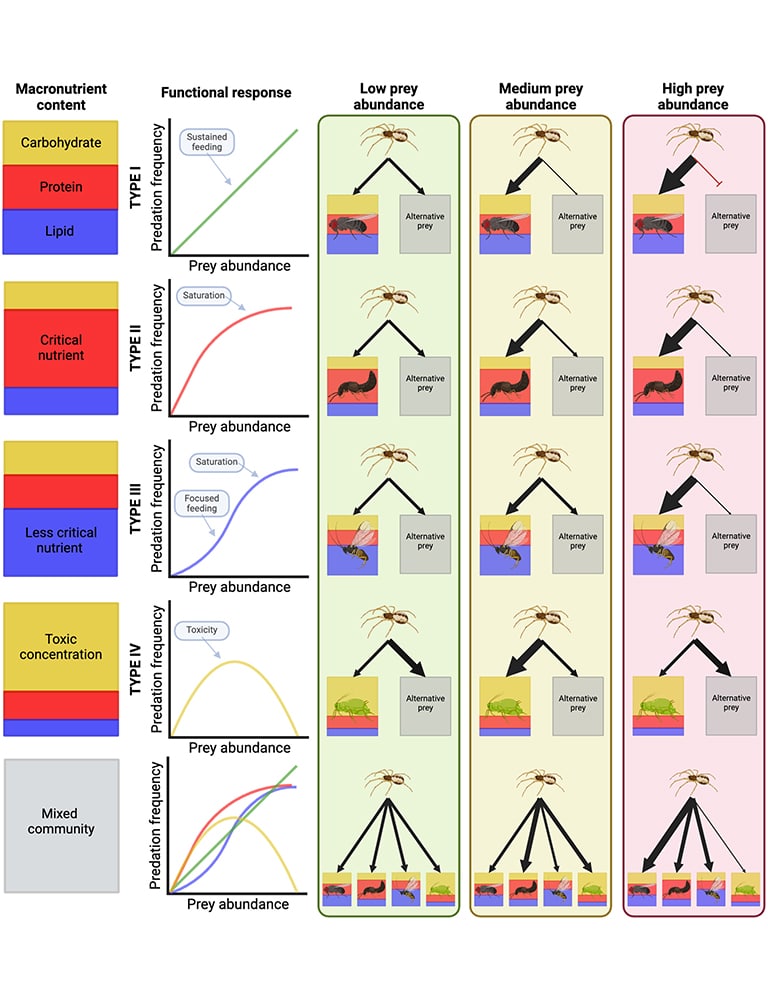
The research team’s work with spider-prey systems provides compelling empirical evidence for nutritional networks. Using cutting-edge DNA metabarcoding combined with precise nutrient analysis, they uncovered several remarkable findings:
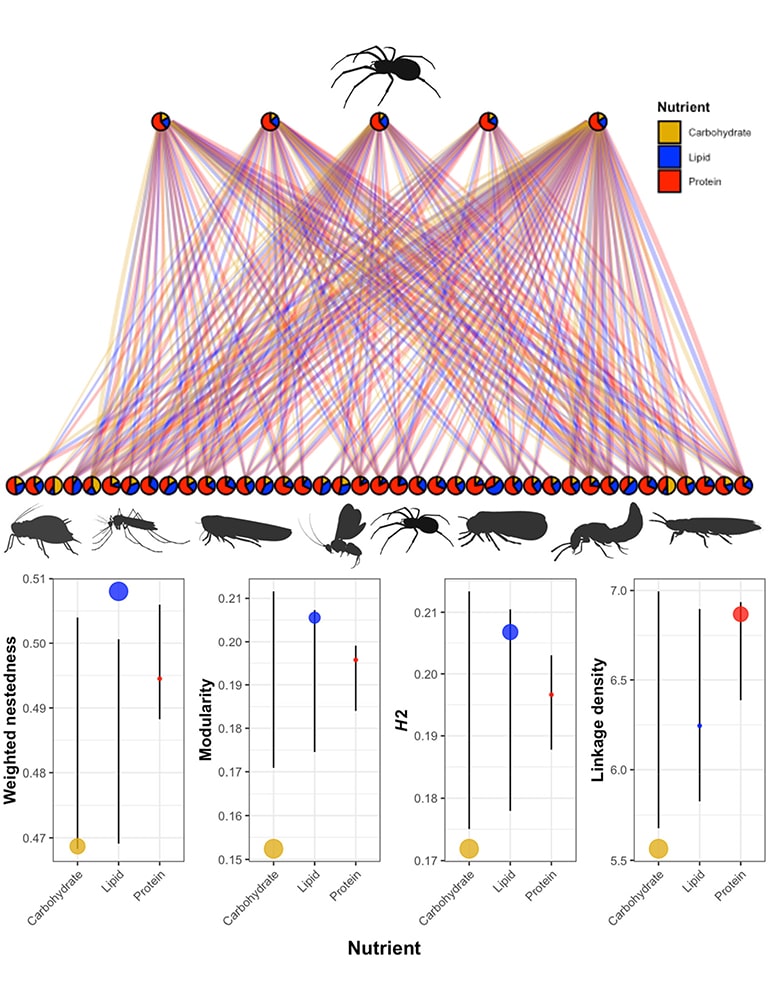
Spiders consistently showed strong preference for lipid-rich prey, even when these species were relatively scarce in the environment. This selective pressure likely drives evolutionary adaptations in both predators and prey, as lipid-rich species may develop better defences while predators refine their hunting strategies.
In carbohydrate-poor environments, spiders adopted more generalized foraging behaviour. Rather than specializing, they became dietary generalists, consuming whatever prey was available. This flexibility comes with trade-offs – while it ensures survival during lean times, it may reduce overall feeding efficiency.
Perhaps most surprisingly, protein availability showed the strongest correlation with predator population stability. Ecosystems with balanced protein sources maintained more consistent spider populations, while those with protein imbalances experienced dramatic boom-and-bust cycles.
Broader Ecological Implications
The nutritional network approach provides powerful insights with real-world applications:
For conservation biologists, this research offers a new toolkit. By identifying keystone nutrient sources – those species that provide critical nutritional profiles – we can better protect ecosystem stability. The study suggests that traditional conservation focusing solely on species diversity may need to incorporate nutritional considerations.
Invasive species management also benefits from this perspective. Many successful invaders are nutritionally flexible generalists, able to thrive across varied dietary conditions. Understanding these nutritional advantages could help predict which ecosystems are most vulnerable to invasion.
Climate change researchers gain new predictive power from this framework. As rising temperatures and changing precipitation patterns alter nutrient cycles, we can now better forecast how these changes will reshape entire ecological communities.
Methodological Breakthroughs
The study introduces several innovative techniques that push ecological research forward:
- Multilayer Network Analysis represents a significant advancement, allowing researchers to simultaneously track multiple nutrients through ecosystems. This reveals how different nutrients create distinct but interconnected interaction patterns.
- Nutritional Trait Matching provides a mechanistic way to predict species interactions. By comparing a consumer’s nutritional needs with a resource’s nutritional offerings, we can forecast feeding relationships with surprising accuracy.
- Dynamic Network Modelling simulates how nutrient changes affect overall network robustness. These models identify critical nutritional thresholds – points where small changes in nutrient availability could trigger major ecosystem shifts.
Future Research Directions
The study outlines several exciting avenues for future investigation:
- Expanding nutritional networks to mutualistic interactions like plant-pollinator systems
- Incorporating micronutrients (like vitamins and minerals) into network models
- Developing global databases of species nutritional profiles
- Creating predictive models for climate change impacts on nutrient cycles
Conclusion
This pioneering research establishes nutrients as fundamental drivers of ecological network structure, providing a powerful new framework for understanding and managing ecosystems. By decoding nature’s nutritional language, scientists can now predict how environmental changes will ripple through food webs and develop more effective conservation strategies.